
Floating Stair Systems in Seattle & the Puget Sound
Structural Coordination in High-End Residential Construction
Floating stair systems have become a defining feature in high-end custom homes across Seattle, Bellevue, Kirkland, and Bainbridge Island. In contemporary Puget Sound residential architecture, floating stairs function as both circulation and structural statement.
They appear minimal.
They are structurally demanding.
In the Seattle custom home market, floating stair systems require early coordination between the architect, structural engineer, and metal fabricator. Without that alignment, performance issues, deflection, and vibration become real risks.
Why Early Structural Coordination Matters
Unlike conventional framed stairs, floating stair systems rely on concealed structural steel to achieve visual lightness.
Successful execution requires collaboration between:
Architect
Structural engineer
Metal fabricator
General contractor
Load paths must be clearly defined before framing begins. Wall backing, slab embedment, and moment resistance must be engineered into the building structure, not added later.
In the Seattle area custom homes, where large window walls and open volumes are common, floating stair systems often carry significant dynamic loads. Human movement introduces vibration, so poorly engineered systems can result in perceptible tread bounce or flex.
In high-end residential construction, that is unacceptable.
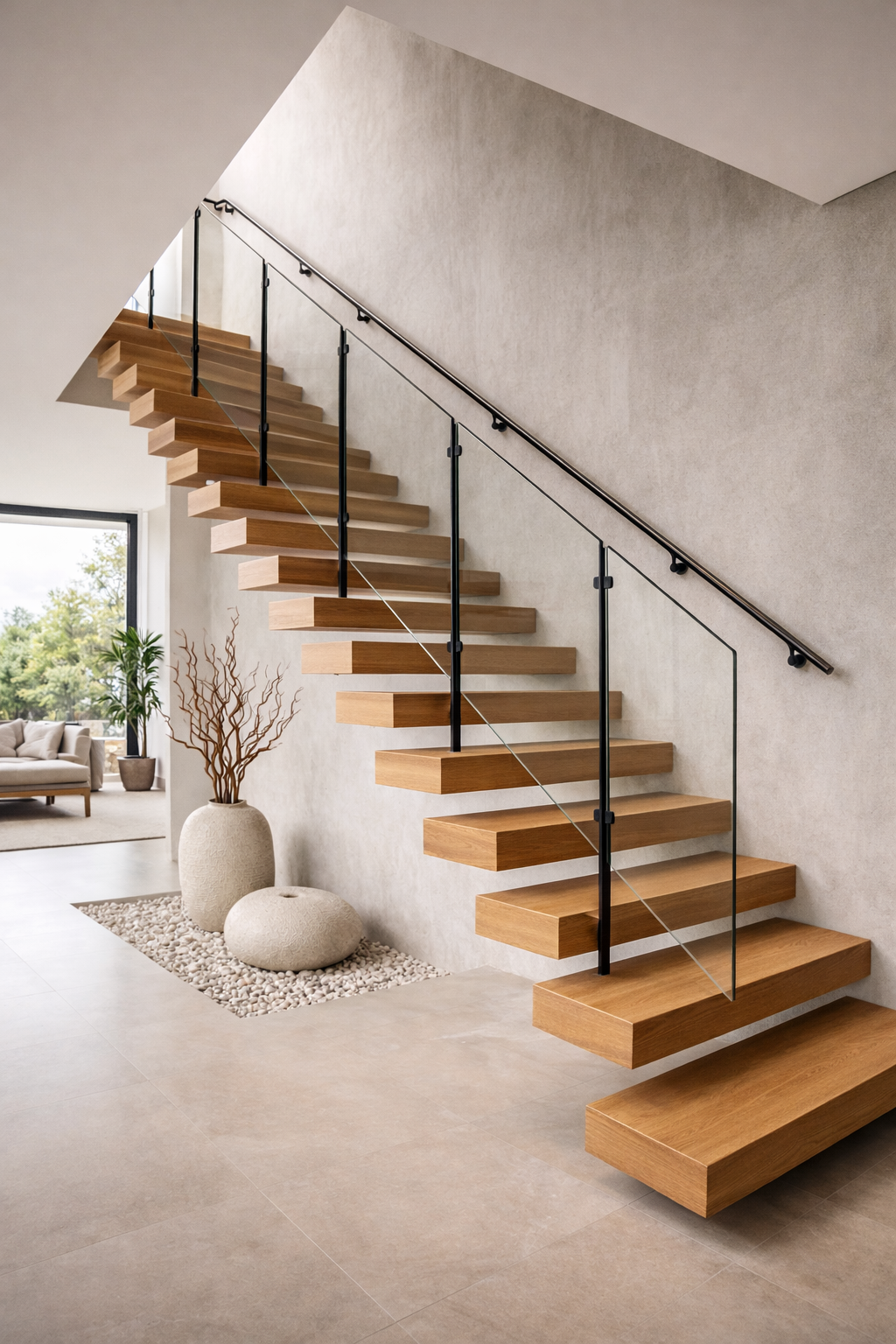
Make it stand out
Floating stairs become an elegant centerpiece of your home.
They are a statement piece that requires precision and design intent from beginning to end.
Vibration, Deflection & Performance in Floating Stairs
One of the most common failure points in floating stair design is underestimating dynamic performance.
Even when static load requirements are technically met, insufficient stiffness in the stringer or connection points can produce:
Tread vibration
Resonance under foot traffic
Long-term weld stress
Perceived instability
Material selection and fabrication strategy are critical.
Proper steel thickness
Correct stringer geometry
Adequate torsional resistance
Engineered connection plates
Fully integrated structural backing
These elements determine whether a stair feels solid or unstable.
In multi-level homes across Bellevue hillsides or Queen Anne vertical builds, the margin for error narrows further due to complex framing conditions.
Material Selection in the Puget Sound Climate
While most floating stair systems are interior installations, environmental factors still matter.
Homes in Bainbridge Island or marine-adjacent Seattle neighborhoods experience elevated humidity and salt influence. Stainless steel grade selection, fastener compatibility, and protective coatings must be specified appropriately.
Inland Bellevue or Kirkland installations may not require the same corrosion resistance levels as waterfront projects. Over-specifying increases cost unnecessarily. Under-specifying increases long-term maintenance risk.
Architectural metal fabrication in the Puget Sound region requires calibrated material decisions, not generic standards.
Integration With Glazing & Finish Systems
Modern floating stair systems in Seattle custom homes frequently incorporate:
Frameless glass guardrails
Concealed LED lighting
Steel-to-glass transitions
Exposed mono-stringer systems
Each of these adds complexity.
Glass tolerances must align precisely with finished steel geometry. Electrical routing must be coordinated before fabrication. Finish sequencing must account for installation order.
If coordination occurs after framing, design flexibility decreases and cost increases.
Precision Fabrication in Seattle Custom Homes
Metal fabrication for floating stairs is not decorative work. It is structural work with architectural visibility.
Precision shop drawings must anticipate:
Field tolerances
Slab variation
Framing shifts
Finish thickness
Installation sequencing
In high-end residential construction across Seattle, Bellevue, and the greater Puget Sound, clients expect both aesthetic clarity and structural confidence.
Floating stair systems demand both.
Studio Metaline: Floating Stair Systems in Seattle, Bellevue & Bainbridge Island
Studio Metaline provides custom floating stair design coordination and metal fabrication services throughout Seattle, Bellevue, Kirkland, Bainbridge Island, and the Puget Sound region.
We work early in the design process with architects and structural engineers to define:
Load transfer strategy
Vibration control and stiffness requirements
Material specification
Fabrication methodology
Installation sequencing
Floating stairs should feel effortless underfoot.
Achieving that performance requires deliberate engineering, precise fabrication, and regional material intelligence.
In the Puget Sound custom home market, early collaboration defines long-term success.